This lesson plan will give you an understanding of the importance and use of sources and ways to identify which ones are reliable and trustworthy and why it’s recommended to use more than one.
Learning outcomes
- Young people will be able to consider the viability and trustworthiness of a source
- They’ll question the origin of a source and analyse whether to believe it whole, in part or not at all
- Young people will consider the authenticity of articles and consider their own unconscious bias
Brief overview
When working out what is real news and what is fake this can be helped by considering the source of the news piece.
This lesson helps young people to look at a variety of sources and to consider whether they think they are trustworthy. It also helps them to consider how different sources can be deemed a trustworthy source for some situations, and less trustworthy for others.
For instance, you may trust the prime minister to give an update on the latest government policy and Wayne Rooney for the offside rule, but it’s unlikely you would reverse the case.
They have to consider their own bias as they choose particular sources.
Lesson 2: Sources and who to trust - slideshow. document
Click here to download PDF

Preparation
- Students require pen and paper
- Download prepared slideshow
- Watch the film Knowing Who to Trust, as suggested in the slideshow
- Download exercise 1 - Trust bingo
- Download exercise 2 if you're using computers
- Download exercise 3 if you're not using computers
- Download the helpsheet for students, if required
Helpsheet. document
Click here to download PDF

There is one video Knowing Who to Trust, which considers different sources.
TEXT: WE HAVE A FEW QUESTIONS ABOUT TRUST.
Young men and women: How do we know which people and organisations we can trust? And which we can’t?
TEXT: AND WHAT ABOUT
Young men and women: When it comes to news and information what is a trusted source and how do we find one?
Mukul Devichand: Do a bit of searching, put on your detective hat, you know – perform the checks you can perform and have a look at the site or the web address that is sharing this story is it one you recognise, that you’ve seen before that you might trust. Has this person got a track record, have they written things before, do they seem to be legit.
Rachel Schraer: When you’re working out whether a source is trustworthy you should be asking yourself – is this person likely to know the answer to the question? Is this their field of expertise? So you might ask a doctor to diagnose you with an illness but you probably wouldn’t want them to mend your car or recommend you a smart phone.
Amol Rajan: Let me tell you how I decide whether or not I can trust a news source - first of all have they shown a commitment to accuracy over a long period of time? Have they consistently got things right? And the second thing which is related is; do they admit when they get things wrong? You know, if you put your hand up and say sorry I made an error, there are factual mistakes in the piece we published then people like me are much more likely to believe you when you say that you got things right.
Young woman: Isn’t who we trust just a simple case of working out who is right and who is wrong?
Amol Rajan: If only it was that simple. The truth is that we all bring our own prejudices, our own world view our own opinions to bear on the information that’s presented to us. So the question of who you trust is often a question about who you really are. And my recommendation, for what it’s worth, is you try as hard as you can to make your views informed by the facts rather than the other way around.
TEXT: SO REMEMBER, DO YOUR RESEARCH, DO YOU KNOW THE NEWS SOURCE, WHAT IS THEIR TRACK RECORD? AND ASK YOURSELF, ARE YOU SHARING SOMETHING BECAUSE IT’S REALLY TRUE, OR JUST BECAUSE YOU WANT IT TO BE?
Exercises
- Exercise 1 is a game of trust bingo - finding the best source for a particular story
- Exercise 2 looks at how different sources tell the same story
- Exercise 3 asks young people to tell the same story from different points of view
Exercise 1: Trust bingo. document
Click here to download PDF

Exercise 2: Using more than one source. document
Click here to download PDF

Exercise 3: A different angle, a different tale. document
Click here to download PDF


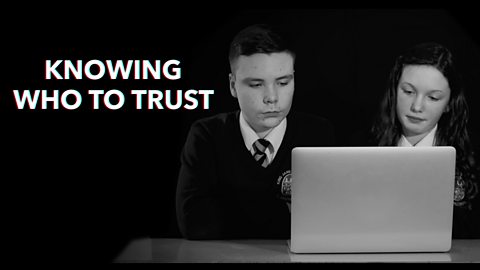
Knowing who to trust. video
In this video you'll hear from Amol Rajan, the BBC’s media editor, journalist Mukul Devichand and Rachel Schraer from BBC Reality Check.
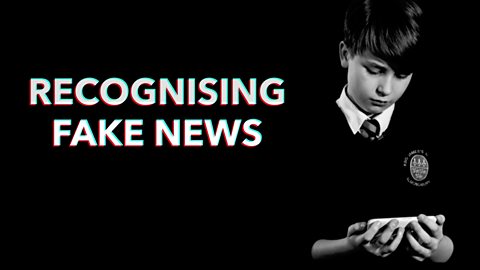
Recognising fake news. video
In this video you'll hear from Amol Rajan, the BBC’s media editor, and journalists Natalie Miller, Mukul Devichand and Rachel Schraer from BBC Reality Check.
Checking the story. video
In this video you will hear from BBC journalists Natalie Miller, Alex Murray and Rachel Schraer from BBC Reality Check.
Numbers and the tricks they play. video
When you’re looking at news stories remember that it’s not just the words you need to take notice of but the numbers too.

Lesson 1: Real versus fake news. video
This lesson will give you a broad understanding of the term ‘fake news’ and the skills and techniques to distinguish between what’s false or fake and what’s real.
Lesson 3: Social media, images and data. video
This lesson will demonstrate how to spot whether a social media feed is genuine or fake, to consider the manipulation of images and think carefully about how the addition of numbers to a story may not be a clear as it first seems.